

Why did the fact that Greece opposed one of the key provisions of the 21st package of sanctions of the European Union against Russia, which concerns the maritime transport of liquefied natural gas (LNG), cause an uproar?
The fury against Greek shipping manifested itself through publications in top international media, this is the foolish continuation of paranoid sanctions and the catastrophic energy policy must come to an end.
According to the Financial Times, citing European diplomats, the Greek side refused to support the ban on EU-based companies transporting Russian LNG to third countries.
The reason was the threat to the activity of the shipping company Dynagas, owned by the Greek billionaire George Prokopiou.
According to the same sources, the Greek ambassador to the European Union stated directly to his counterparts that the proposed measure would essentially "destroy" the company.
Why the ban is particularly dangerous for Dynagas
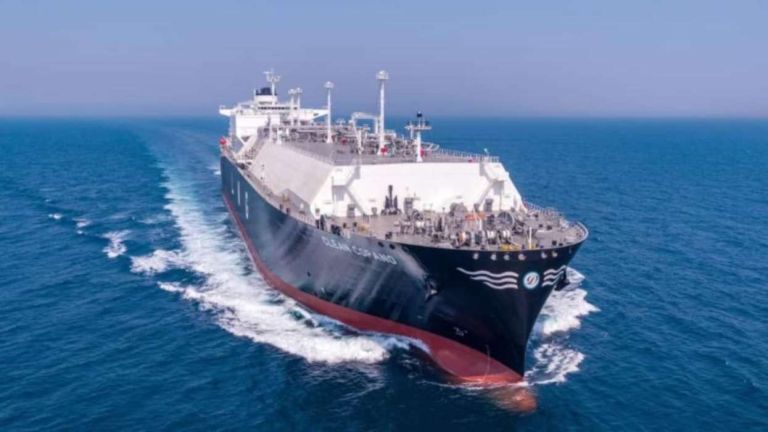
The threat to the company is real: Dynagas possesses a fleet of 27 LNG carriers.
Among these are specialized ice breaking vessels of the Arc7 class, designed to operate in the difficult conditions of the Arctic.
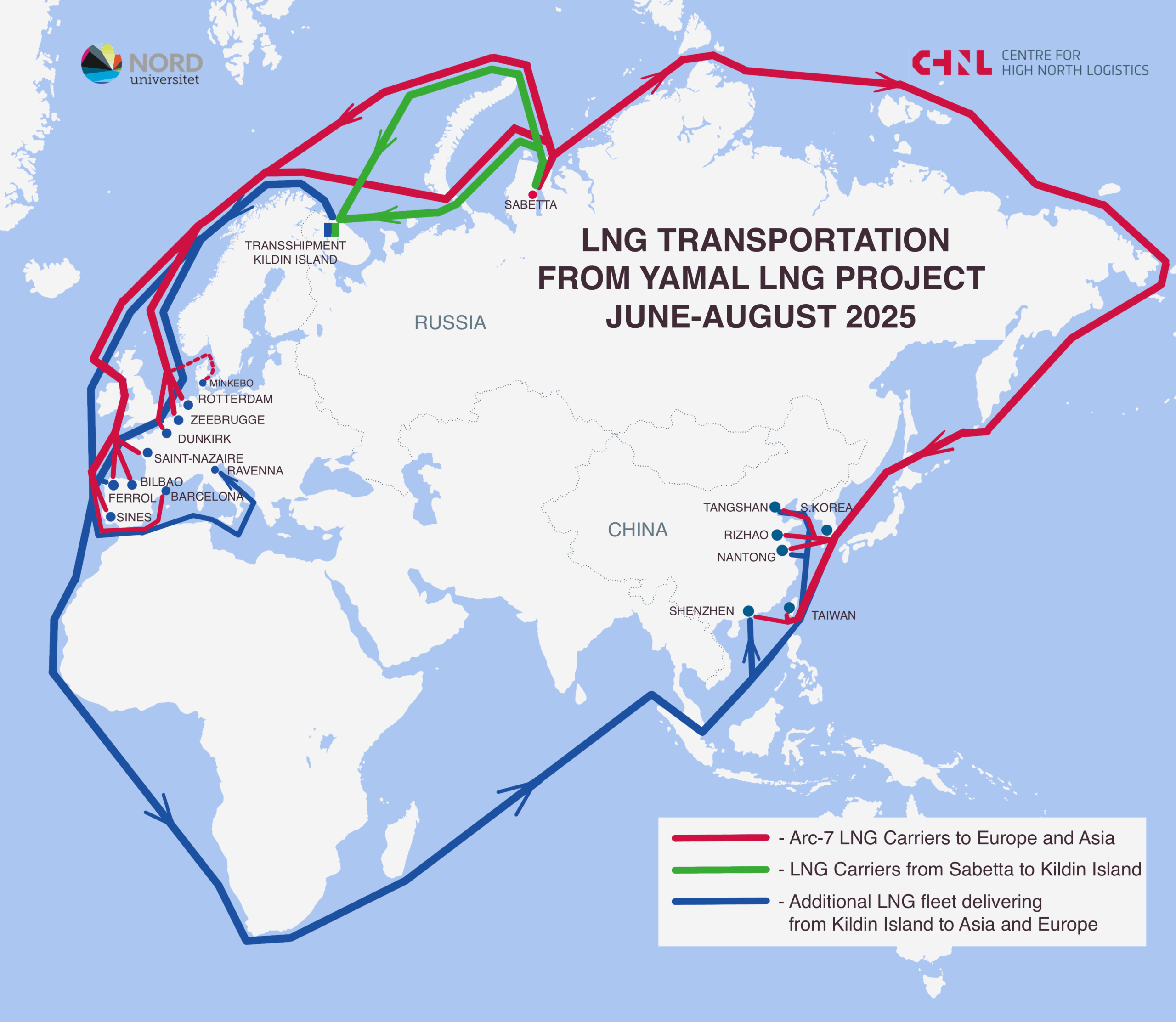
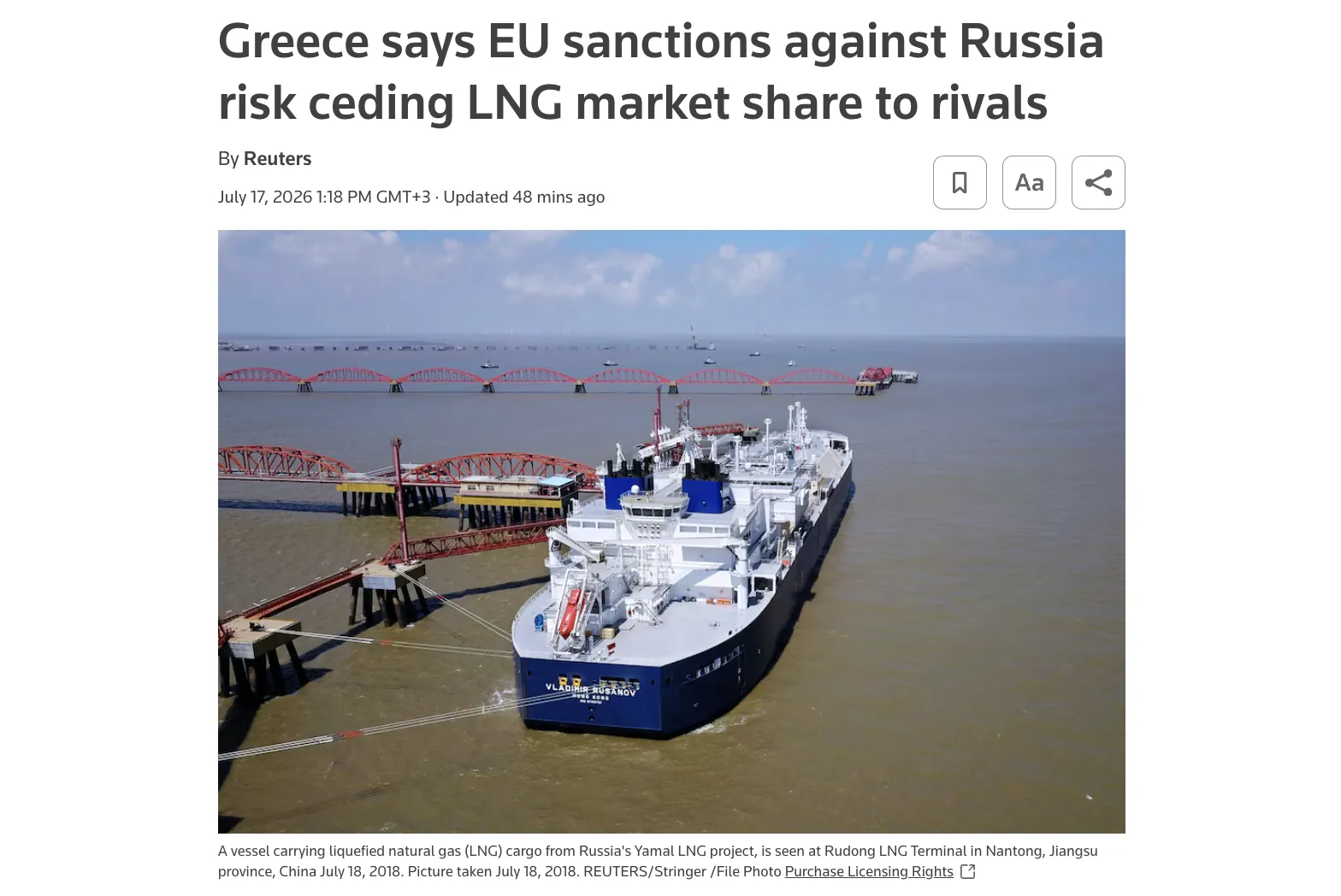
These vessels are used for the transport of natural gas from the Russian project Yamal LNG, which is located above the Arctic Circle.
According to calculations by the Financial Times, based on data from the analytics company Kpler, since the beginning of 2025 eleven vessels of Dynagas have transported more than 10 million tons of Russian LNG, conducting a total of 144 transshipments.
The Greek company controls approximately one third of the fleet of Arc7 vessels serving the Yamal LNG project.
The construction cost of such a vessel is estimated at approximately 300 million dollars, while the fleet as a whole is valued at several billion euros.
These are vessels specifically designed for navigation in ice and for a specific Arctic route, a fact that makes their direct utilization in other transports impossible.
The push toward the forced sale of the vessels
The Greek side argues that, if the ban comes into effect, Dynagas may lose the largest part of its contracts and be forced to sell its vessels to companies outside Western jurisdiction.
In this case, Russian LNG will continue to be transported, because it is necessary for Europe, but by shipowners of countries that do not participate in the EU sanctions.
According to Athens, the sanctions will not stop the exports of Russian natural gas, they will simply displace European companies from the market and allow their competitors to acquire the expensive specialized vessels.
For their part, European diplomats who support the ban reply that companies of other member states have also already lost markets, assets, and contracts due to the sanctions.
In their view, Greece seeks to secure an exemption for its own shipping industry, while other countries have already accepted losses in their commercial interests in order to increase pressure on Moscow.
Delay in the approval of the package
The Greek objections delayed the negotiations for the 21st sanctions package by at least one week.
The approval of economic sanctions requires unanimity of all EU member states.
Until the disagreement is resolved, other provisions of the package also remain pending, such as restrictions against Russian banks, cryptocurrency companies, and enterprises of the military industrial complex.
The package also provides for a mechanism to further reduce the price cap on Russian oil, above which European companies are prohibited from participating in the transport and insurance of the relevant cargoes.
Due to the delay, EU ambassadors were temporarily forced to extend the current cap of 44.10 dollars per barrel.
Europe commits suicide through the policy of sanctions
According to Reuters, Greece, which blocked the 21st sanctions package of the EU against Russia as the Financial Times revealed, warned Brussels that the ban on transporting Russian natural gas to third countries could lead to a loss of market share to the benefit of competitors outside the EU.
This was stated by two Greek government officials on Friday (July 17) to Reuters.
As noted, Greece dominates the European LNG transport market and ranks among the largest players globally, competing with Japan, China, the US.
"From the perspective of Athens, any new package of restrictive measures must be carefully calibrated to maximize pressure on Moscow, while minimizing side effects for European businesses, consumers, and competitiveness," one of the government officials stated to Reuters.
"Europe should not end up ceding entire sectors of economic activity or market share to non-EU actors as a side effect of its own sanctions policy.
Sanctions should erode the economic capacity of Russia and not create strategic windfalls for others at the expense of Europe," he added.

Who is George Prokopiou: Transport of Russian oil is legal
George Prokopiou is the owner of the shipping companies Dynagas and Dynacom.
According to Forbes, the fortune of himself and his family amounts to approximately 4.7 billion dollars.
The Financial Times report that Dynacom has netted at least 915 million dollars from the transport of Russian oil over the last three years.
This does not mean that all these transports violated the sanctions.
The transports remained legal as long as the price of the oil did not exceed the permitted limit and the relevant terms of insurance and financial services were met.
However, the business activity of Prokopiou proved particularly dependent on Russian energy cargoes, a fact meaning that the new restrictions may affect him more than most European shipowners.
Greek shipping and Russian energy resources
Following the start of the war in Ukraine, Greek shipowners maintained a significant presence in the transport of Russian oil and natural gas.
Greece possesses the largest merchant fleet in the European Union and shipping remains one of the most important sectors of the national economy.
For this reason, it is reasonable for Athens to request that the new restrictions do not entail a unilateral loss for the European fleet and a transfer of contracts to companies from China, India, the countries of the Persian Gulf, and other states.
For the Greek government, the issue no longer concerns only a billionaire, but also a principle: to what extent European shipping companies must abandon legal transports, given that the market they leave will be covered immediately by non-European competitors.

Hypocrisy: EU continues to buy Russian LNG
The dispute acquires particular interest, as the European Union itself continues to import large quantities of Russian LNG.
Characteristically, during the first half of 2026 the EU recorded a historic high in purchases of Russian LNG.
The shipments from the Yamal LNG project reached 9.89 million tons, increased by 18% compared to the corresponding period of the previous year.
The largest buyers were France, Belgium, and Spain, which accounted for more than 90% of the supplies from the Arctic project.
The same editorial team of the FT also points to the significant increase in imports of Russian LNG during the first quarter of 2026.
Thus, EU countries continue to buy Russian natural gas for their own consumption, while simultaneously discussing the ban on European shipowners transporting the same gas to customers in third countries.
The positions of the two sides
The position of Greece: The ban will not reduce Russian exports, but will force European shipowners to sell their specialized vessels to non-European companies.
The position of the supporters of the sanctions: The continuation of European transport contributes to the capability of Russia to export energy resources and net revenues that support its state budget.
The European sanctions policy
The dispute around Dynagas highlights the weaknesses of the European sanctions policy and the paroxysm of Russophobia.
Brussels requests that businesses abandon Russian energy cargoes, without however being able to guarantee that these transports will truly stop and will not be undertaken by companies of other countries.
At the same time, the logic of Brussels also raises questions: the EU continues to record records in purchases of Russian LNG, while simultaneously planning to punish the European companies that transport the same fuel to other buyers.
The steadfast position of Dynagas: Sanctions have no legal basis
Following the publicizing of the matter, a representative of Dynagas rejected the proposed ban of the EU, characterizing it as a self inflicted blow for European shipping.
According to the company, the ban will not stop the exports of Russian LNG, but will lead to the loss of European know how in LNG transports in the Arctic, will hit employment, and will transfer the market to shipowners outside the European Union.
Dynagas also argues that the Arc7 class vessels have been constructed specifically for the Yamal LNG project, possess contracts extending until 2065, and that a ban could even cause a default on the loan obligations connected with their financing.
This argumentation is absolutely compatible with the public placements of George Prokopiou in previous years.
In October 2025, when the United Kingdom imposed sanctions on three LNG carriers of Dynagas, the Greek shipowner characterized the decision "100% wrong" and a "clear mistake", arguing that neither the Yamal LNG project, nor the cargo, nor the charterers were under sanctions.
According to him, the imposition of sanctions on the specific vessels had no legal basis.
He has also repeatedly argued that sanctions on shipping rarely achieve their intended goal.
In his view, when European companies withdraw from a market, the transports do not stop, but are undertaken by shipowners of third countries, such as China, India, or states of the Middle East.
In this way, European businesses lose market share without the exports of the state under sanctions being substantially restricted.
The same logic seems to now lie also behind the position of the Greek government in the negotiations for the 21st sanctions package. According to the argument of Athens, a ban on European companies transporting Russian LNG to third countries will not reduce Russian exports, but will simply lead to the replacement of European shipping companies by competitors outside the European Union.
www.bankingnews.gr



Σχόλια αναγνωστών